
Updates
Plot announces $10 million in new funding to accelerate Social Video Intelligence for Marketing Teams
June 1, 2026
This is some text inside of a div block.
Brand crises don't start on Twitter anymore — they start in untagged TikToks, Instagram Reels, and YouTube videos your listening tools can't see. The gap between when something starts and when your team finds out is the real problem. Here's how the best brand teams close it.
.webp)
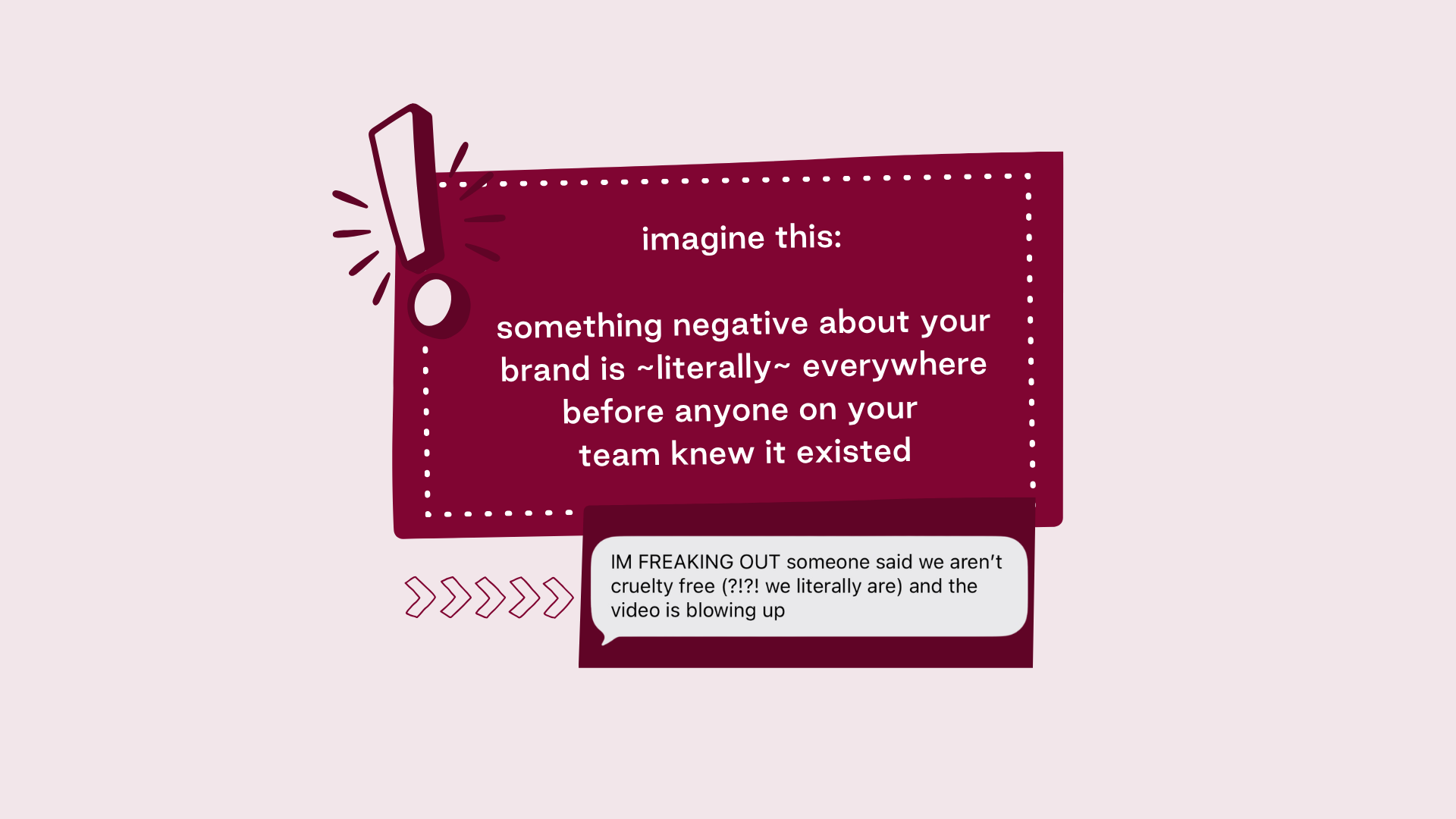
Someone sends you a TikTok, your product is front and center, the take is not great, and the timestamp says eleven days ago.
The brain does the SpongeBob meme where every room is on fire simultaneously.
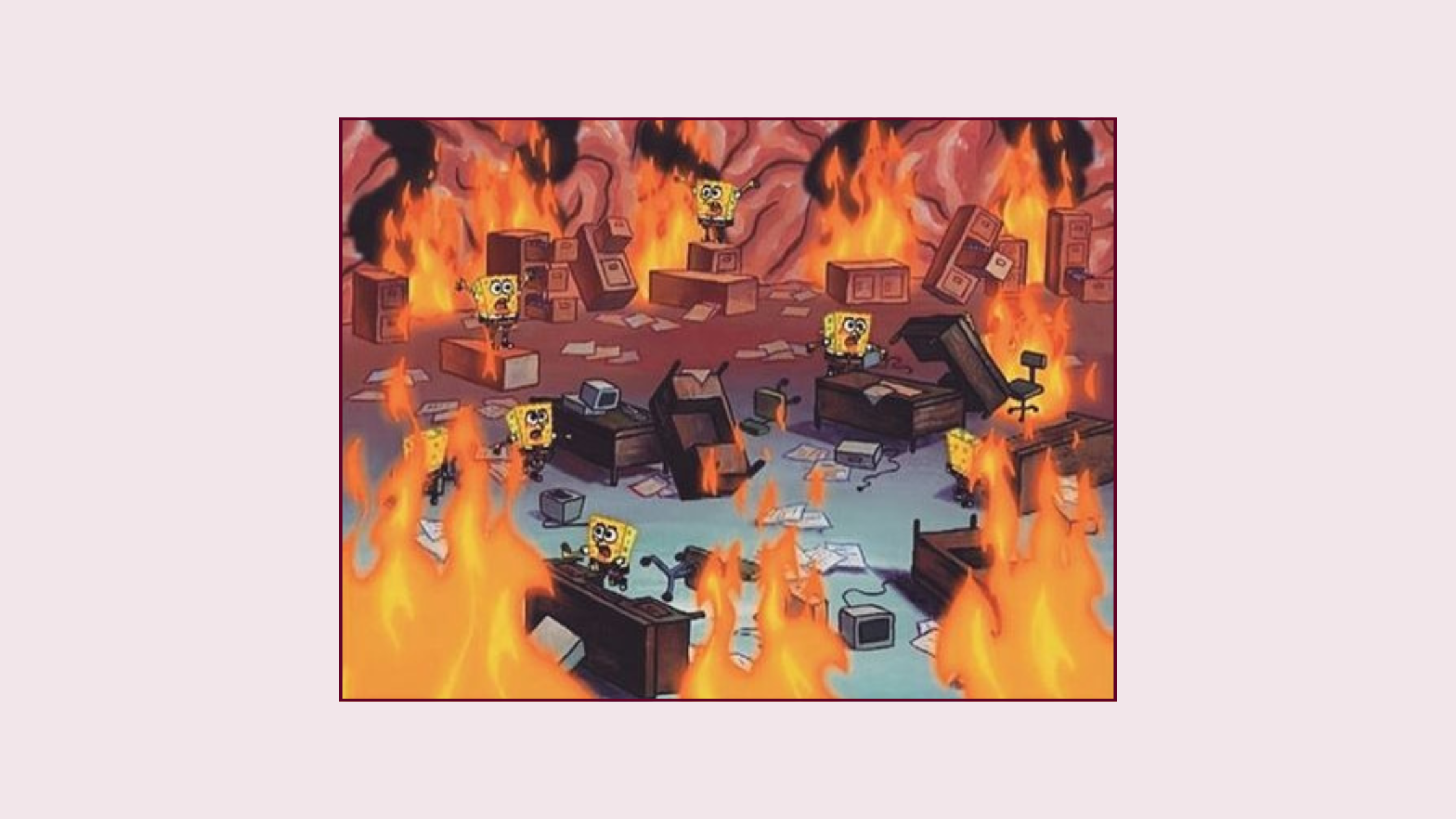
That moment almost never means a team dropped the ball. The dashboards were running, the alerts were configured, people were paying attention. The miss was about where everyone was looking — and that's actually a much more fixable problem than it feels like in the middle of the panic.
For a long time, brand crises moved through channels you could actually watch — a critical article, a tweet gaining traction, a Reddit thread. All of it searchable. All of it the kind of thing that would eventually trip a keyword alert. "Monitor, catch the signal, respond quickly" worked because the signal showed up somewhere findable.
That's not where the conversation is anymore. A creator films a get-ready-with-me with your product on the counter and shares an opinion with 800k people who trust her taste. No caption mentioning your brand. No hashtag. Nothing an alert can catch. The video gets stitched and passed around and builds a whole narrative, and by the time any of it surfaces somewhere searchable, the story has been going on without you for days.
Most brand teams talk about crisis readiness in terms of response time: how fast the statement went out, how quickly someone acknowledged the situation. That framing only works if you assume the team finds out when the conversation starts.
They usually don't. There's a real gap between when something starts spreading and when anyone on the team knows, and when that gap exists, response time is measuring from the wrong moment.
The more useful thing to track is time-to-awareness: the lag between when something starts and when you actually find out. The same situation is a different problem at 300 views than at 300k with a week of momentum behind it. Same underlying issue, totally different room to shape it. The teams that feel calm in hard moments are usually the ones who found out early enough to still have choices.
Most of what's said about your brand on any given day is positive, or at least neutral — people living their lives with your product somewhere in the frame. A few patterns are worth flagging though, because they develop when nobody catches them early.
A pattern of product concerns. One post about an experience that felt off is almost always one person having a bad day. But the early stages of a real pattern look exactly the same. The difference only shows up across multiple unrelated posts over time. Catching it early means working with useful feedback while it's still useful feedback — before it picks up a story of its own.
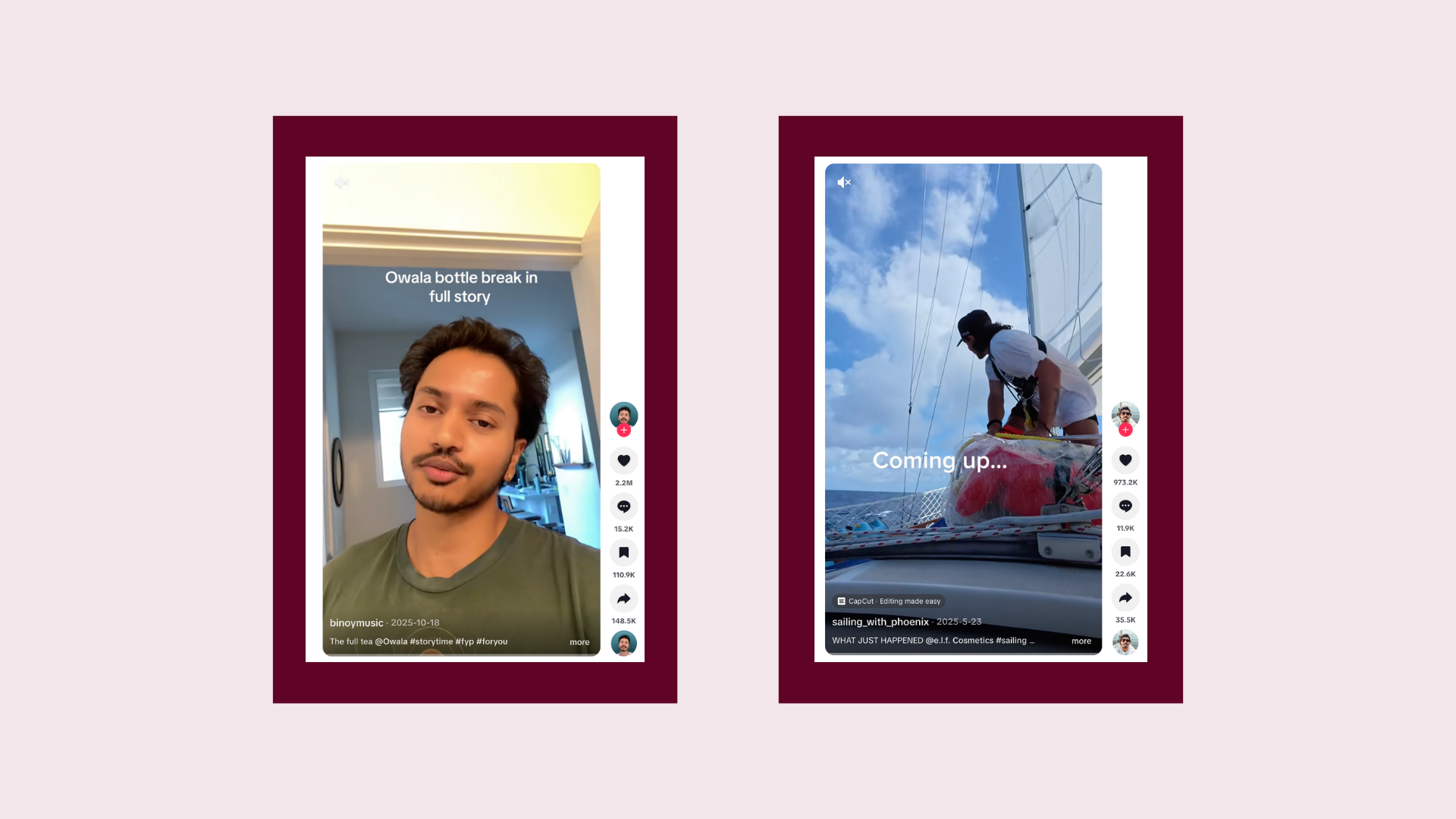
A cultural moment worth moving on fast. A video blows up and becomes the thing everyone's talking about that week — not because of your brand, just because that's how content works now. Oliver Widger went viral sailing across the Pacific with his cat Phoenix, and e.l.f. saw a kindred spirit in his whole rule-breaking vibe. They air-dropped him a care package mid-ocean and turned it into 15.8M views of a brand moment they didn't have to build from scratch. An Owala bottle showed up as a defense safeguard in a TikTok storytelling of a home intrusion that blew up overnight, and the Owala team sent the creator a care package — one of their biggest creator moments of the year. Both brands moved within days. It can just as easily go the other direction: a brand waits too long, the moment passes, and the attempt to join in reads as late. The difference is usually how fast the team reads what's actually happening and whether engaging adds something to the story or just draws more eyes to something that would have faded.
Misinformation that’s easy to address. A creator confidently telling their audience your product contains an ingredient it doesn't. A claim about a formulation change that never happened. A real screenshot taken wildly out of context. False claims spread through repetition and move fast, but there's a real window early on where a calm, clear response lands well — people are still forming opinions. A week later the conversation has shifted and it gets more complicated, even with the facts completely on your side.
Coordinated activity using your brand name. Less common, but worth knowing about. Fake UGC following a suspicious pattern. Affiliate content that uses your brand name as the hook but routes traffic to a competitor. Accounts with no obvious connection posting on timing that's a little too synchronized. This almost never surfaces through tagged-mention monitoring. It becomes visible when someone catches the broader pattern, or when numbers start feeling off downstream.
When volume spikes and a screenshot lands in the group chat, the team usually has good instincts. The hard part is acting on them before the window closes.
Is this your actual audience or a completely different demographic that happened to find it? Is the tone as negative as it looks, or way more nuanced in the comments? Does this need a response today, or will it be irrelevant by the weekend? The answers are sitting right there — in the video, the replies, the creator's other posts, who's sharing it. The teams who handle these moments well aren't guessing better. They just read all of it in 15 minutes instead of piecing it together from five tabs over an afternoon.
The faster you get to an accurate read, the more of the decision window you still have.
Your stack does a good job on text — tweets, articles, Reddit threads. But most of the conversation about brands is happening in video now, and legacy tools weren't built to catch it. A creator can talk about your product for three minutes with your logo on screen the whole time, and if she doesn't tag or caption the brand, a text-based tool never sees it.
Up to 80% of brand mentions on TikTok and Instagram are untagged.
That's the gap we built Plot around. Plot is AI-powered social listening for the video-first era — it picks up brand mentions across TikTok, Instagram, and YouTube through logos, audio, and on-screen text, so the conversation shows up in your dashboard whether or not anyone used a tag. Teams at Lululemon, Pepsi, CAVA, and Fenty Beauty are already seeing conversations about their brand they never knew existed.
If the gap between when something started and when your team found out is what's been biting you, video listening is what closes it.
See the conversations your brand didn't know it was in → plot.so
.webp)